
Insights / AI in practice
Where AI pays back in a mid-size business, and where it doesn’t
Mujahid Mujeebullah
Technology practice · 5 min read
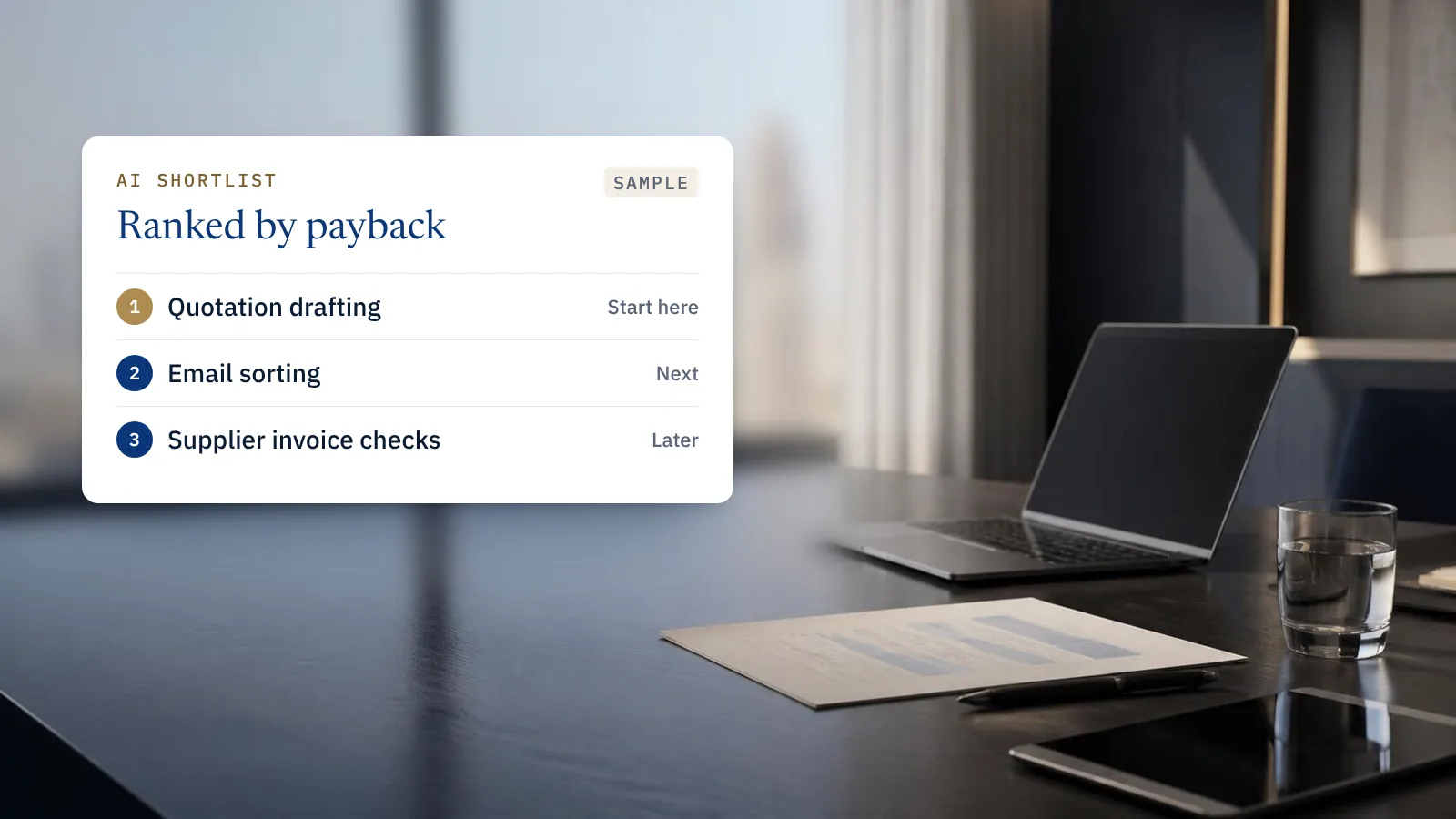
Most businesses have been told they need an AI strategy. Far fewer have been told where AI will actually save time in their own operation, and where it will create new work instead.
At a renovation contractor we work with, quotations used to take more than a week. With AI drafting the scope and costing from a site brief, and a person checking every line, they now go out the same or next working day.
A worked example
Take a building-materials supplier whose sales team writes around thirty quotations a week. Each one starts from a customer email, pulls prices from the system, and ends as a two-page letter. On average it takes forty minutes. (Illustrative figures.)
This task has the three things that make AI worth trying. It happens often. The input is mostly text. And the person sending the quotation already checks it before it goes out, so a wrong draft is caught at no extra cost.
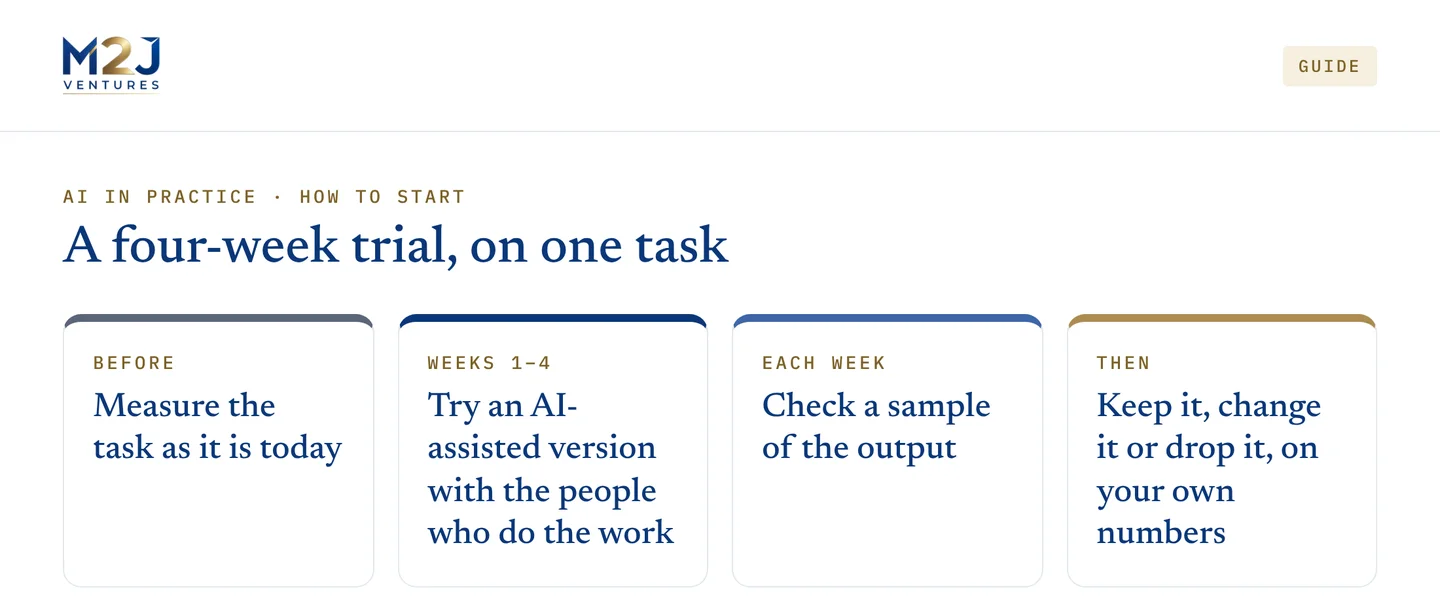
The team tries an AI-assisted version for four weeks. The AI reads the email and drafts the letter; the salesperson checks the prices and the wording, then sends it. They record the time for each quotation, and once a week someone reviews a few drafts for errors.
At the end, the numbers decide. If the average has dropped and the error check is clean, they keep it. If the time saved went into fixing drafts, they change the instructions or drop it. Either result is useful, because it is based on their work, not on a vendor’s demo.
Where it usually helps
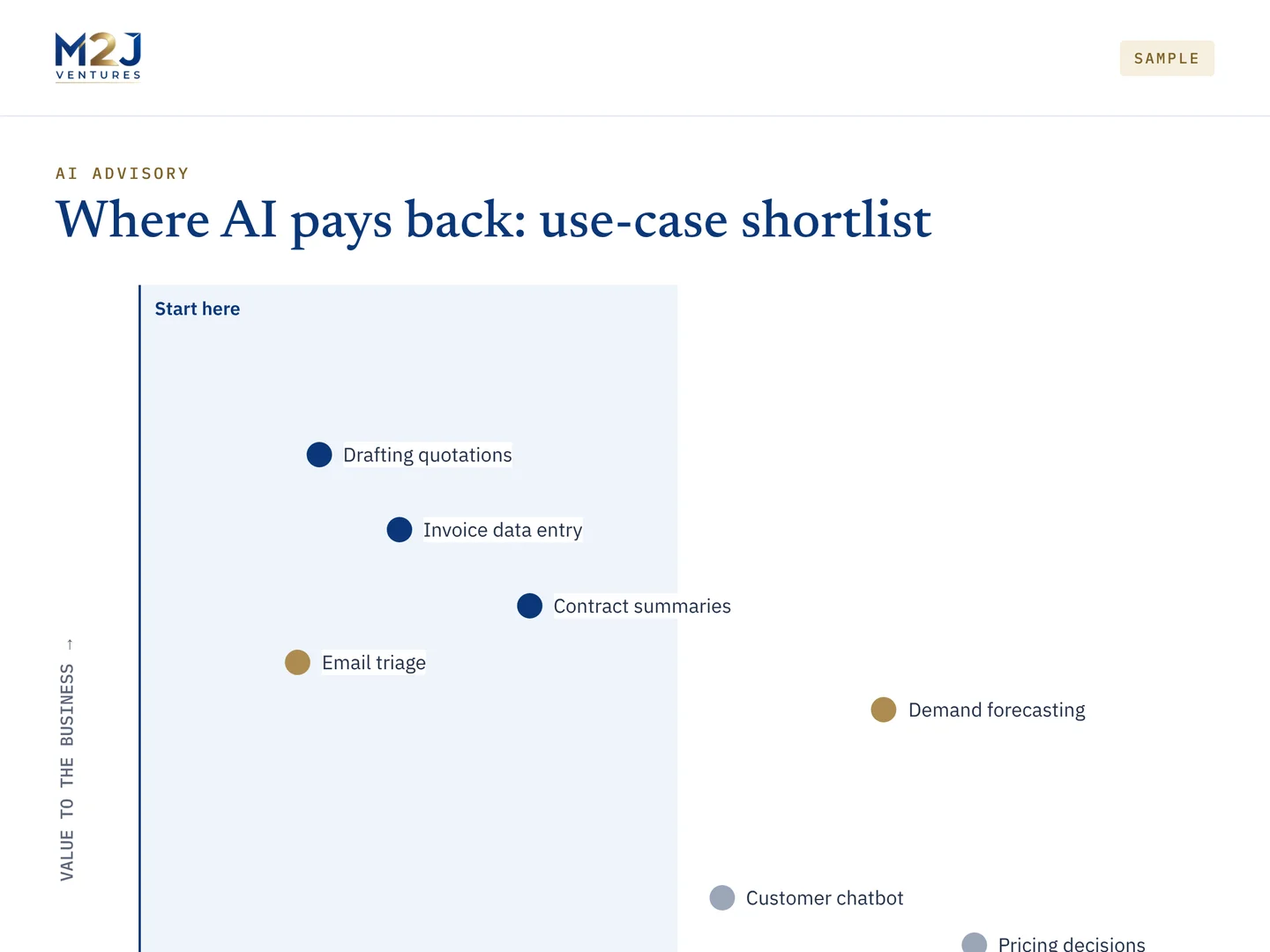
The pattern above repeats in drafting letters, proposals and reports; summarising long email threads and meeting notes; answering “what did we agree with this supplier?” from your own documents; and reading invoices or forms to pull out the fields your systems need, with a person confirming anything unusual.
Where it usually disappoints
Decisions with real consequences, such as pricing, credit, hiring and anything safety-related, still need a named person to make and own them. AI can prepare the information, but if nobody has time to check its output properly, the risk lands on the business.
It also struggles where the process is not written down, or where the data is messy. If each person does a task differently, AI copies the confusion faster. If customer records are duplicated, it inherits the duplicates. And sometimes a report, a template or a rule in your existing software does the same job more cheaply and predictably.
Keeping it under control
Give each AI use a named owner who decides what it may be used for, and a fallback for when it is wrong or unavailable. Where the output matters, keep a record of what it produced and what was decided.
And decide, in writing, what information never goes into public AI tools. Personal data about customers and staff is protected under UAE data protection law, so this is worth settling before anyone starts experimenting, not after.
This article is general information, not advice for your specific situation. See our Professional Content Disclaimer.

Mujahid Mujeebullah, Strategic IT & AI Advisor at M2J Ventures. Over 30 years in IT, including enterprise IT leadership across the Middle East, Africa and the wider Eastern Hemisphere. About → · LinkedIn →